⏰ 6 min read | August 17, 2026
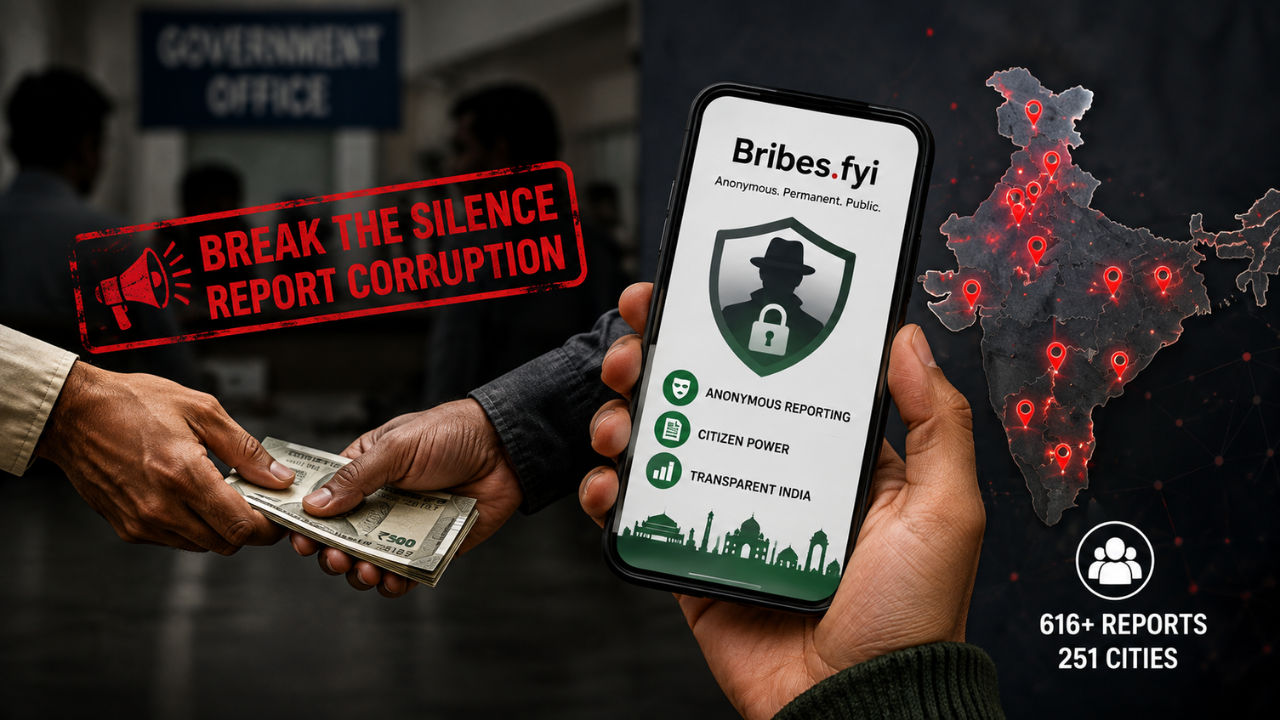
BribesFyi is a brand-new website that’s giving ordinary Indians a simple way to speak up about bribery — anonymously, without any account, sign-up, or fear of being traced. If you’ve ever paid a “speed money” bribe at an RTO or watched a government clerk hint at a favour before stamping your file, this platform wants to turn that frustrating, private experience into public, searchable data. In this post, we’ll break down what BribesFyi actually does, how it works, what the early numbers are already revealing about corruption patterns across Indian cities, and why a tool this simple could matter a lot more than it looks.
What Is BribesFyi?
Think of BribesFyi as a crowdsourced complaint board, except instead of complaining about a bad restaurant, people are reporting bribes they were asked to pay by government officials. It was built by a developer named Aryan Nishad, who calls it “an anonymous registry designed to document citizens’ experiences with corruption.” That one line pretty much sums up the whole idea — it’s not trying to catch corrupt officials red-handed or file legal cases. It’s trying to build a record, in public view, of where and how often bribery shows up in everyday interactions with the Indian government.
What makes it stand out from your typical government grievance portal is that there’s no login, no OTP, no name, no phone number. You just share what happened, and it becomes part of a growing public dataset that anyone can browse for free.
How BribesFyi Works
The whole flow is designed to take about a minute, and honestly, that speed is probably the platform’s biggest strength. Here’s what a report involves:
- Which government department was involved (police, RTO, passport office, and so on)
- The bribe amount that was allegedly asked for
- The city where it happened
- Whether the person actually paid up, or refused and still got the service
Once submitted, the report goes into a public database with anything that could identify the person stripped out. From there, anyone visiting the site can search and filter this data to see which departments or cities show up most often, and compare corruption patterns across the country.
Did You Know? According to BribesFyi’s own numbers, 38% of the incidents reported on the platform involved people who refused to pay a bribe and still managed to get their work done — a small but useful reminder that saying no doesn’t always mean getting stuck.
What the Data Is Already Showing
Even in its early days, BribesFyi has collected a decent chunk of data — 616 reports spread across 251 cities. That’s not a massive sample by national standards, but it’s enough to start spotting patterns. Police departments top the list by a wide margin, with 337 reports, which is more than half of everything submitted so far. RTOs come in a distant second with 88 reports, followed by revenue and land record offices at 69, passport-related offices at 43, and municipal corporations rounding it out with 29 reports.
If you look at this list, it lines up pretty closely with the everyday touchpoints most Indians actually have with government offices — getting a driving licence, registering property, applying for a passport, or dealing with local police. That’s probably not a coincidence; these are exactly the interactions where people are most likely to run into someone asking for a little extra “convenience fee.”
Why an Anonymous Bribe Tracker Matters
India already has official channels for reporting corruption, like the Central Vigilance Commission or state anti-corruption bureaus. But let’s be honest — most people never use them. Filing a formal complaint means paperwork, follow-ups, and often a fear of retaliation, especially if the person you’re reporting has some local influence. BribesFyi sidesteps all of that friction by removing identity from the equation entirely.
This kind of tool doesn’t replace formal anti-corruption systems, but it fills a gap they don’t cover well: giving regular citizens a low-effort way to document what they experienced, and letting the public see patterns that individual complaints alone would never reveal. If a particular city’s RTO keeps showing up in reports, that’s useful signal — for journalists, researchers, policymakers, or just someone deciding whether to brace themselves before their next visit.
Limitations You Should Know About
To its credit, BribesFyi is upfront about what its data isn’t. The platform itself describes its database as a “self-selected sample” — meaning it only reflects people who chose to visit the site and submit a report. It’s not a scientific survey, and it shouldn’t be read as a definitive ranking of which Indian city or department is “most corrupt.” Cities with more tech-savvy, internet-active populations could simply generate more reports than places with lower internet penetration, regardless of actual bribery rates.
So the smart way to use BribesFyi is as a starting point for conversation and awareness, not as hard statistical proof. It’s a mirror reflecting what people are willing to share, not a full picture of corruption in India.
Platform Snapshot
| Specification | Details |
|---|---|
| Platform Name | BribesFyi |
| Founder | Aryan Nishad |
| Reports Collected So Far | 616 |
| Cities Covered | 251 |
| Top Reported Department | Police (337 reports) |
| Report Submission Time | Approx. 1 minute |
| Account Required | No — fully anonymous |
| Data Type | Self-selected, crowdsourced sample |
Access & Availability
| Detail | Information |
|---|---|
| Original Price | Free |
| Current Price | Free |
| Bank Card Offer | Not applicable |
| EMI | Not applicable |
| Exchange | Not applicable |
Frequently Asked Questions
BribesFyi is a free, anonymous platform that lets Indian citizens report bribery incidents without creating an account or sharing their name, and browse a public database of reported corruption trends across cities and departments.
BribesFyi was founded by Aryan Nishad, who describes it as an anonymous registry designed to document citizens’ experiences with corruption.
No. BribesFyi itself says its reports are a self-selected sample submitted by users, so it should not be treated as a scientific or comprehensive measure of corruption levels in India.
Submitting a report takes roughly one minute. Users just enter the government department involved, the alleged bribe amount, the city, and whether they paid or refused.
As per the platform’s own data, police departments lead with 337 reports, followed by RTOs with 88 reports, revenue and land records offices with 69, passport offices with 43, and municipal corporations with 29.
Verdict: Should You Care About BribesFyi?
BribesFyi isn’t going to single-handedly fix corruption in India, and it doesn’t claim to. But it does something genuinely useful — it gives people a place to put an experience that usually just gets vented about to friends and family, and turns it into something searchable and public. With 616 reports across 251 cities already logged, and police departments clearly topping the chart, the platform is already surfacing patterns worth paying attention to, even with its self-admitted limitations. If you’ve got a bribery story of your own, adding it takes about as long as reading this paragraph, and it helps build a slightly clearer picture for everyone else.
For more breakdowns of platforms, apps, and tech stories that actually affect everyday life in India, keep following JatinTechTalks.
```


No comments:
Post a Comment