⏰ 6 min read | August 13, 2026
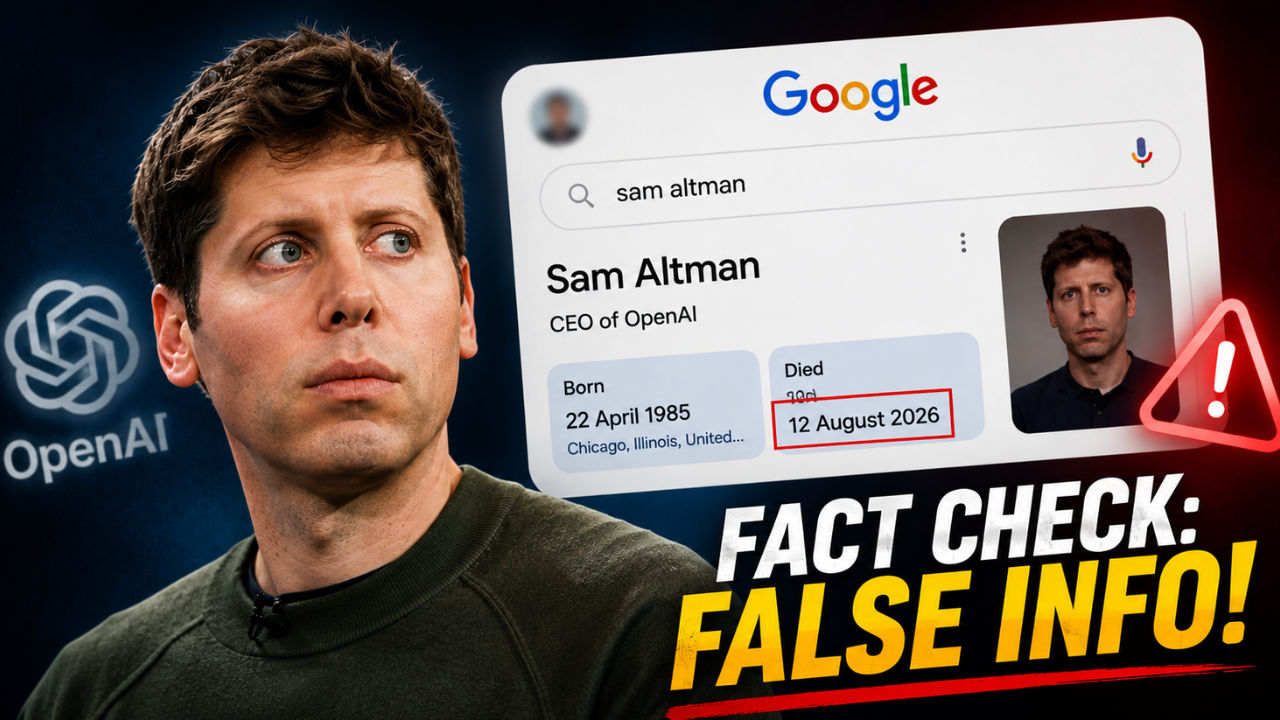
Google Search recently made a scary mistake — it told the world that OpenAI CEO Sam Altman had died, and for a few hours, panic and confusion spread across social media before Google stepped in to clean up the mess. If you scrolled past a headline claiming the ChatGPT boss had passed away, take a breath: he is completely fine. What actually happened is a classic case of technology trusting the wrong source at the wrong time, and it is a story worth understanding because it could just as easily happen to any public figure, including people you follow every day.
What Exactly Happened
On Wednesday, August 12, 2026, people searching for Sam Altman on Google noticed something alarming sitting right at the top of the results — an information card stating that he had died, complete with a specific date. For anyone who did not dig deeper, this looked completely official, because Google’s knowledge panels usually carry an air of authority. Screenshots of the false death notice quickly made their way onto X (formerly Twitter) and other platforms, with users tagging Google and asking what on earth was going on. Naturally, given that Altman is one of the most recognisable names in the AI world right now thanks to ChatGPT, the story spread fast.
Did You Know? Google Search’s info panels, the boxes that show birthdays, net worth, or “died on” dates for famous people, are not written by Google staff. They are auto-generated by software that scans trusted-looking sources, and Wikipedia happens to be one of the biggest ones it leans on.
The Real Culprit: Wikipedia Vandalism
So how did a search engine used by billions of people end up spreading fake news about a death that never happened? The answer traces back to Wikipedia. Someone edited Sam Altman’s Wikipedia page and slipped in a false death date, essentially digital vandalism that anyone with a free account can attempt on the open-editing platform. Google’s automated crawling systems, which regularly scan Wikipedia to keep its knowledge panels fresh and updated, picked up this edited information without any human double-checking it first. Within a short window, that fabricated detail was sitting on Google’s results page looking just as credible as any verified fact.
This is not really a story about Google intentionally spreading misinformation. It is a story about how much of the internet’s “factual” information actually flows through a handful of editable community-run sources, and how quickly a single bad edit can ripple outward into tools that hundreds of millions of people trust every single day.
How Google Responded
Once the screenshots started piling up online, Google’s official account, NewsFromGoogle on X, jumped in to clarify the situation. The company’s statement was straightforward: it thanked users for flagging the issue, confirmed the incorrect information was no longer showing up, and made it clear this was not something Google staff had typed in manually. In their words, when someone vandalizes a public information source, that bad data can end up shaping what appears in Search results.
To Google’s credit, the fix was quick. As soon as enough people reported the error, the false information card was pulled down, and searches for Sam Altman went back to showing accurate, current details about his role at OpenAI. Still, the damage of a few hours of viral confusion was already done, with plenty of people sharing the incorrect claim before the correction rolled out.
Why This Keeps Happening To Search Engines
This is far from the first time a search engine or a big tech platform has accidentally declared someone dead. Whenever an automated system pulls information straight from open, crowd-edited sources without a manual sanity check, there is a real risk of a bad-faith edit slipping through the cracks, at least for a little while. Wikipedia itself does have moderators and bots working to catch vandalism, but there is always a small window between a malicious edit going live and someone reverting it, and that is exactly the window Google’s system got caught in this time.
The bigger takeaway here is about how much of what we consider “verified” online is actually just automated trust in another automated system, layered on top of a community-editable database. It works remarkably well most of the time, but incidents like this show the cracks whenever that chain gets exploited, even briefly.
What This Means For Everyday Searchers
For regular users, the lesson is simple: do not take a Google info panel as gospel truth, especially for breaking or unusual claims like a celebrity death. A quick cross-check with a couple of reliable news outlets takes just a few seconds and can save you from spreading something false to your friends and followers. For Sam Altman personally, this was likely more annoying than anything else, but for other public figures, this kind of glitch can cause genuine distress to family, friends, and fans before it gets corrected.
Google has dealt with similar knowledge panel hiccups before, and this incident is a reminder that even the world’s biggest search engine is only as reliable as the data sources feeding it. As AI-driven search results become more common, expect this conversation about verifying automated information to only get louder.
Incident Snapshot
| Specification | Details |
|---|---|
| Affected Person | Sam Altman, CEO of OpenAI |
| Platform Involved | Google Search info panel |
| Date of Incident | August 12, 2026 |
| Root Cause | Vandalized edit on Sam Altman’s Wikipedia page |
| Company Response | Acknowledged via @NewsFromGoogle on X, issue resolved |
| Current Status | Corrected; Sam Altman confirmed alive and active at OpenAI |
Cost & Availability Of The Glitch
| Detail | Info |
|---|---|
| Original Price | Not applicable — free public search feature |
| Current Price | Not applicable — free public search feature |
| Bank Card Offer | Not applicable |
| EMI | Not applicable |
| Exchange | Not applicable |
Frequently Asked Questions
Why did Google Search show Sam Altman as dead?
Someone vandalized Sam Altman’s Wikipedia page with a fake death date, and Google’s automated system pulled that false info straight into its search results panel.
Is Sam Altman actually dead?
No. Sam Altman is alive and well. This was purely a data glitch caused by Wikipedia vandalism, not a real event.
Did Google make this change on purpose?
No. Google clarified on its official X account that this was not a manual change by the company — it was an automated pull from a vandalized public source.
How did Google fix the error?
Once users flagged the incorrect information, Google removed the false death notice from the search results almost immediately.
Can this kind of Google Search mistake happen again?
Yes, as long as Google leans on open, publicly editable sources like Wikipedia for its info panels, similar vandalism-driven errors remain possible for other public figures too.
Verdict
At the end of the day, this Google Search glitch was less about AI going rogue and more about an old internet problem — open, editable sources getting exploited, and automated systems trusting them a little too quickly. Sam Altman is very much alive and running OpenAI, and Google has already fixed the error, but the incident is a solid reminder to always double-check anything shocking you see in a search result before hitting that share button. Want more breaking tech stories explained in plain, simple language? Keep following JatinTechTalks for the latest updates.
```


No comments:
Post a Comment