⏰ 6 min read | August 12, 2026
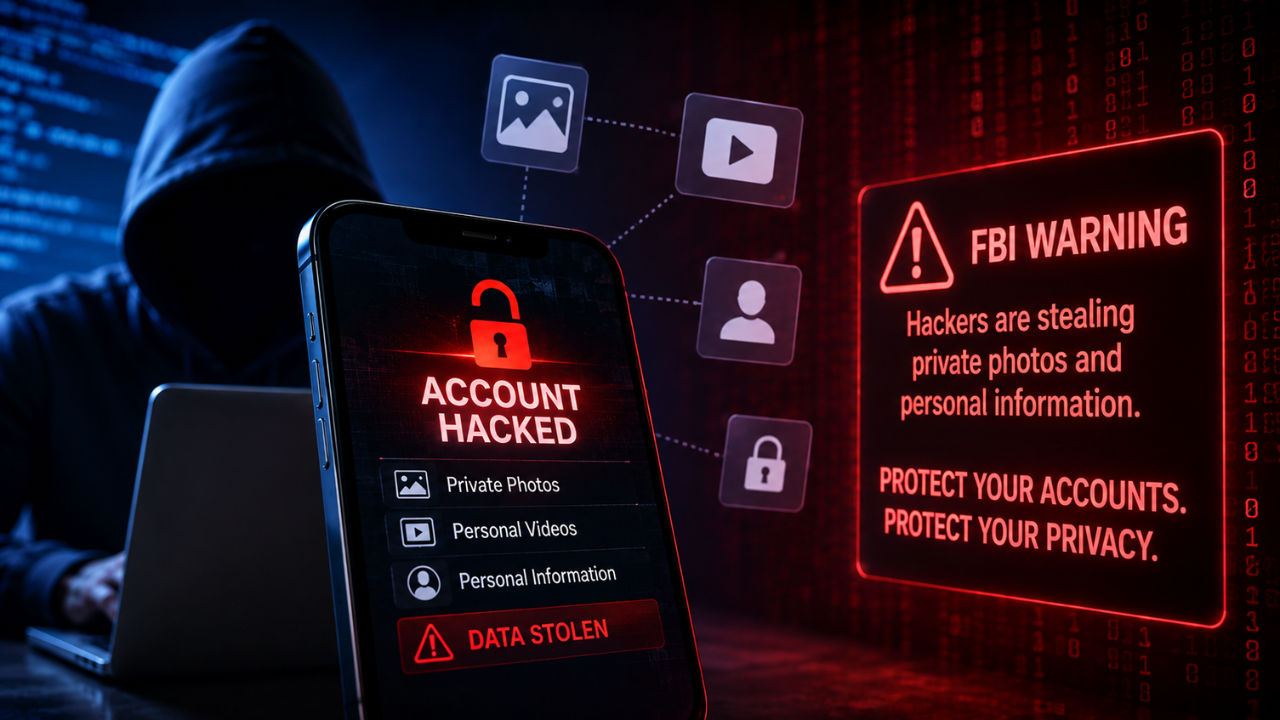
Hackers breaking into social media accounts to steal private photos has become such a big problem that the FBI itself decided to step in with a public warning. According to the agency, criminals are quietly slipping into people’s personal accounts, digging out sensitive photos and videos, and then either dumping them on shady forums or selling them to the highest bidder. If you have ever thought “why would anyone target me, I’m nobody special,” this is exactly the kind of thinking hackers count on. Let’s break down what’s actually happening, how these break-ins work, and the simple steps you can take today to keep your accounts locked down tight.
Table of Contents
What the FBI Warning Actually Says
The Federal Bureau of Investigation recently put out an alert flagging a rise in attacks aimed squarely at personal social media and messaging accounts. The target isn’t your bank details this time — it’s sexually explicit photos and videos that people have stored or shared privately. And the FBI made a point of saying this isn’t just an adults-only problem; minors are being targeted too, which makes the whole situation even more alarming.
Once hackers get their hands on this content, they don’t just sit on it. The stolen files often end up posted on public forums for anyone to see, or quietly sold through illegal online marketplaces. Alongside the photos, victims’ personal information — their real name, phone number, email address, and social media handles — gets exposed too. That combination is what turns a privacy breach into something much scarier: harassment, stalking, and sextortion, where criminals threaten to leak the material unless the victim pays up.
Did You Know? Sextortion cases involving stolen private photos have been rising so fast that the FBI now treats them as one of the top threats facing both teenagers and adults online, not just a niche cybercrime issue.
How Hackers Are Breaking Into Accounts
You might assume hacking requires some kind of genius-level coding skill, but honestly, most of these break-ins rely on tricking people rather than beating fancy encryption. The FBI pointed out three main tactics that keep showing up again and again.
First, there’s the brute force approach. Hackers take giant lists of passwords leaked from other websites over the years, mix in details they scrape from your public social media profile — your pet’s name, your birthday, your city — and then just keep guessing until something clicks. If you’ve reused an old password anywhere, this is exactly how it comes back to bite you.
Second is impersonation. Here, the hacker pretends to be customer support from the platform you use, reaching out to say there’s a “security issue” with your account. The goal is to get you comfortable enough to hand over a verification code that just landed in your inbox or text messages. The moment you share that code, they’re in — and there’s no lock left standing between them and your private files.
Third, and probably the most common one you’ve heard of, is phishing. This involves fake emails or cloned websites designed to look exactly like the real login page of a platform you trust. You type in your username and password thinking you’re logging in normally, and instead you’ve just handed your credentials straight to a criminal.
What Happens to the Stolen Photos
Once a hacker breaks into an account, the private photos and videos rarely stay private for long. Some end up circulated on forums where strangers trade this kind of content for free. Others become a product — sold through underground marketplaces to people willing to pay for stolen intimate material. Either way, the victim loses all control over where their photos end up or who sees them.
It doesn’t stop at the images either. Hackers typically grab whatever personal details are attached to the account — full name, phone number, email, and username — and that data travels along with the stolen photos. This is exactly the fuel that powers sextortion schemes, where a criminal contacts the victim directly and threatens to release the material publicly unless they’re paid off. It’s a deeply personal violation, and the FBI’s warning is really an attempt to get ahead of it before more people are affected.
How to Stay Safe
The good news is that none of the FBI’s recommended precautions require you to be a tech expert. They’re simple habits that make a huge difference.
Start with your passwords. Every account should have its own unique password, and it shouldn’t be built around obvious personal details like your name, your birthday, or your kid’s name. A password manager can generate and remember strong passwords so you don’t have to.
Next, turn on multi-factor authentication everywhere it’s offered. This adds a second checkpoint — usually a code sent to your phone or generated by an app — so even if a hacker guesses your password, they still can’t get in without that extra step.
Be extremely cautious with links in emails and text messages, even ones that look official. Instead of clicking through, open the app or website directly and log in from there. And remember this golden rule: no legitimate company will ever ask you to read out a one-time verification code or password-reset code over the phone or in a chat. If someone asks for that code, it’s a scam, full stop.
Finally, think twice about where you store sensitive photos and videos. The FBI’s advice is blunt — avoid keeping this kind of content on any platform that’s connected to the internet. Cloud backups and social media apps are convenient, but they’re also exactly what hackers are targeting.
What to Do If You’re Already a Victim
If you suspect your account has already been compromised, don’t wait around. Change your password immediately from a device you trust, log out of all active sessions, and turn on multi-factor authentication if you haven’t already. Check your account’s recovery email and phone number too, since hackers sometimes swap these out to lock the real owner out permanently.
If explicit content has already been stolen or someone is threatening to leak it, report it to the platform right away and consider filing a report with the FBI’s Internet Crime Complaint Center. Save any messages or threats as evidence rather than deleting them in a panic. Acting fast genuinely limits how far the damage can spread.
| Specification | Details |
|---|---|
| Threat Type | Account takeover to steal private photos and videos |
| Primary Targets | Adults and minors using social media platforms |
| Attack Methods | Brute force password guessing, support impersonation, phishing links |
| Data at Risk | Photos, videos, name, phone number, email, username |
| Possible Consequences | Public leaks, sale on illegal marketplaces, sextortion, stalking |
| Issuing Authority | Federal Bureau of Investigation (FBI) |
| Protection Cost | Details |
|---|---|
| Original Price | Free — basic account security settings cost nothing |
| Current Price | Free — multi-factor authentication is built into most platforms |
| Bank Card Offer | Not applicable — no purchase required |
| EMI | Not applicable |
| Exchange | Not applicable — this is a free safety upgrade, not a product purchase |
Frequently Asked Questions
Why did the FBI warn people about hackers stealing private photos?
Because a growing wave of hackers are breaking into personal social media accounts specifically to steal sexually explicit photos and videos, which then get shared on forums or sold on illegal marketplaces, putting both adults and minors at risk.
How exactly are hackers breaking into social media accounts?
Mainly through three tactics — brute force attacks using leaked passwords, impersonating customer support to steal verification codes, and phishing emails or fake login pages that copy real platforms.
What do hackers do with the stolen photos and personal data?
They often post the images publicly on forums or sell them through underground marketplaces, while the victim’s personal details get used to fuel harassment, stalking, and sextortion attempts.
How can I protect my social media accounts from being hacked?
Use a unique strong password, switch on multi-factor authentication, avoid clicking suspicious links, and never share a one-time verification code with anyone, no matter who they claim to be.
Is it safe to store private photos on social media or cloud apps?
The FBI advises against it. Any platform connected to the internet is a potential target, so the safest option is to keep sensitive photos and videos stored offline.
The Verdict
The bottom line here is simple: hackers breaking into social media accounts to steal private photos isn’t some rare, far-off risk — it’s happening right now, and the FBI wouldn’t issue a public warning if it weren’t serious. The fix, thankfully, doesn’t cost a rupee. A unique password, multi-factor authentication, and a healthy dose of skepticism toward random links and “support” messages will shut the door on most of these attacks before they even start. Take fifteen minutes today to lock down your accounts — future you will thank you.
For more practical security guides and the latest tech news explained simply, keep exploring JatinTechTalks.


No comments:
Post a Comment